

What is Jin Shin Jyutsu? A Gentle Art for the Nervous System
Most healing modalities ask something of you. Track this. Breathe here. Stay with that sensation. Process this memory.
Jin Shin Jyutsu asks something different. It asks you to receive.
If your nervous system has been working hard for a long time — bracing, managing, staying alert, this distinction matters more than it might sound. This post explains what Jin Shin Jyutsu is, how it works, and who it tends to support most.
What is Jin Shin Jyutsu?
Jin Shin Jyutsu® is a gentle, non-invasive healing art that supports balance and regulation within the body by working with the energetic pathways that influence physical, emotional, and nervous system functioning.
Rooted in ancient Japanese wisdom and informed by modern understanding of physiology and stress response, the practice uses light touch, breath awareness, and intentional placement of the hands to help restore harmony where energy has become disrupted or stagnant.
It is not massage. It is not acupuncture. It requires no needles, no manipulation, and no verbal processing.
The work is subtle, non-forceful, and deeply orienting for a nervous system that has spent a long time in a state of effort or defence.
Where Does Jin Shin Jyutsu Come From?
Jin Shin Jyutsu® is an ancient Japanese healing art that was rediscovered and documented in the twentieth century by Jiro Murai, a Japanese scholar who used the practice to heal himself from a serious illness. His work was later brought to the West by Mary Burmeister, who studied under Murai in Japan and introduced the practice to the United States in the 1950s.
The name translates roughly as "the art of the Creator through the person of knowing and compassionate man." At its core, it reflects a philosophy that the body carries its own intelligence and its own capacity to restore balance, given the right conditions.
Today, Jin Shin Jyutsu® is practised across the world and is used as a complementary support alongside conventional medical care, therapy, and other healing approaches.
How Does Jin Shin Jyutsu Work?
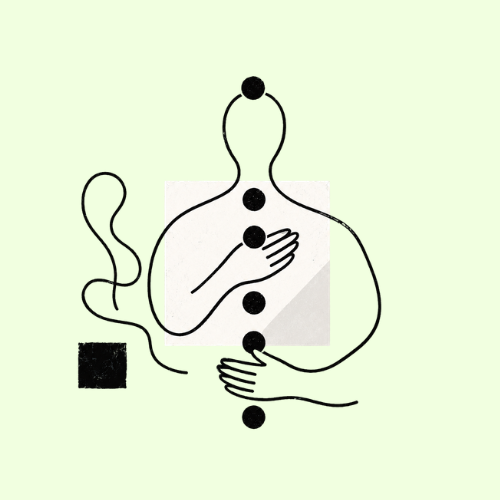
Jin Shin Jyutsu® works by placing the hands lightly on specific sites of the body, known as Safety Energy Locks, in sequences called "flows." Each flow corresponds to particular energetic pathways associated with organ function, emotional patterns, and stress responses.
The understanding behind the practice is that energy moves through the body along specific pathways, and that stress, trauma, illness, or emotional overwhelm can interrupt or stagnate this flow. When energy becomes blocked, the body responds, often through tension, fatigue, pain, or dysregulation.
Gentle contact at key sites along these pathways helps the system reorganise toward balance. The practitioner works with both hands, holding points in sequence, listening to the body's subtle rhythmic responses and following what's needed.
The client remains fully clothed throughout. There is no pressure, no manipulation, and no demand placed on the body to do anything. The practitioner's role is to create the conditions for the body's own intelligence to move toward coherence.
What Happens in a Jin Shin Jyutsu Session?
A Jin Shin Jyutsu session is quiet, unhurried, and structured around the body's own rhythm.
You arrive and lie down fully clothed, usually on a treatment table. The practitioner begins by listening to the body through the pulses, a light assessment of the energetic quality at the wrists, which helps orient the session to what the body most needs that day.
From there, the practitioner places their hands lightly on specific areas of the body, holding each placement with stillness and attentiveness. Sessions typically last around an hour.
What clients often notice during a session:
A natural deepening of the breath
A sense of warmth or gentle movement through the body
Moments of internal settling or release
Emotional ease without having to name or process anything
A quality of rest that feels different from ordinary relaxation
There is no right way to experience a session. Some clients feel a great deal. Others simply feel quiet. Both are valid. The body takes what it needs.
What Can Jin Shin Jyutsu Support?
Jin Shin Jyutsu® is appropriate for a wide range of individuals and presentations. It is particularly well-suited for those whose nervous systems are overwhelmed, depleted, or have been living in a state of chronic activation.
It may offer support for:
Chronic stress and nervous system dysregulation — helping the body access a more settled, parasympathetic state
Fatigue and low energy — supporting improved flow and vitality when the system has become depleted
Emotional overwhelm — offering a non-verbal route to settling that doesn't require processing or articulating what's happening
Physical tension and pain — addressing the energetic disruption that often underlies chronic physical holding patterns
Sleep difficulties — supporting deeper regulation that can improve rest over time
Anxiety and hypervigilance — gently orienting an overactivated system toward safety without force or demand
Because the approach is entirely non-verbal and non-invasive, Jin Shin Jyutsu® can be a particularly accessible entry point for clients who are not yet ready for deeper trauma processing work, or for those who find talk-based approaches activating rather than settling.
It works well alongside therapy, somatic work, functional medicine, and other healing modalities.
Who Is Jin Shin Jyutsu Best Suited For?
Jin Shin Jyutsu® tends to resonate most with people who need regulation and grounding first, before any deeper work begins.
It is a strong fit for:
Clients who need a gentle, non-verbal entry point to healing. If talking about what's happening feels like too much, or if verbal processing has reached its limit, Jin Shin Jyutsu offers a different door.
Those pairing somatic care with therapy. If you're working with a therapist but want additional support for your nervous system between sessions, Jin Shin Jyutsu can provide that steady, regulatory foundation.
Individuals who are not yet ready for trauma processing. You don't have to be ready to go deep for this work to help. Meeting the body where it is, without demand, is the practice.
People who feel perpetually "on." If your baseline is high alert, constant effort, or an inability to land, Jin Shin Jyutsu offers the body a lived experience of something different.
Those navigating chronic illness or medical stress. The gentleness of the approach makes it well-suited to those with complex health histories or sensitised systems.
Is Jin Shin Jyutsu Available Online?
Yes. Jin Shin Jyutsu® sessions are available both in person in Seattle and online for those who are not local.
Online sessions follow the same structure and attentiveness as in-person work. The practitioner guides you through a self-care sequence, or works with you remotely using the same principles and hand placements, adapted for distance. Many clients find online sessions surprisingly effective, particularly for nervous system support and regulation.
If you are based in the Seattle area and prefer to work in person, sessions are offered at Cobi's Seattle practice. Both formats are held with the same level of care and attunement.
How Is Jin Shin Jyutsu Different From Other Bodywork?
Jin Shin Jyutsu® is often compared to acupuncture, Reiki, or massage. While there are philosophical overlaps, the practice is distinct in several ways.
Unlike acupuncture, it uses no needles and requires no skin contact beyond gentle hand placement over clothing. Unlike massage, it involves no manipulation or pressure. Unlike Reiki, it works with a specific, structured system of energy pathways and assessment protocols rather than open-ended energy transmission.
What sets it apart most clearly is its specificity and its gentleness. The practitioner is working with a well-mapped system, following the body's own signals, and adjusting the session in real time based on what the pulses and the system are communicating.
For nervous systems that are sensitive, overwhelmed, or have been through a great deal, this quality of attentiveness without demand can feel profoundly different from other forms of touch-based care.
Jin Shin Jyutsu in Seattle: What to Know Before You Book
If you're based in Seattle and exploring Jin Shin Jyutsu® for the first time, here's what's worth knowing.
Not all practitioners work with the same depth of training or the same clinical awareness. If you are navigating trauma, chronic illness, or complex nervous system presentations, it matters who you work with. Look for a practitioner who understands the nervous system, who works within a trauma-informed framework, and who will meet you where you are rather than moving at a pace that's too fast for your system to integrate.
At Konadu Health and Wellness, Jin Shin Jyutsu® is offered as part of an integrative approach to health that centres the nervous system, honours the body's own pace, and holds space for complexity without rushing toward resolution.
If you're not sure whether Jin Shin Jyutsu® is the right starting point for you, a consultation is the best place to begin.
Ready to Experience It?
Jin Shin Jyutsu® is one of those things that is easier to feel than to explain. If something in this post has resonated, if you're tired, overactivated, or simply ready for a different kind of support, it may be worth experiencing for yourself.
Sessions are available in person in Seattle and online.
Cobi Konadu is an integrative health practitioner and nervous system-informed guide based in Seattle, WA. Her work is rooted in trauma-informed, somatic, and functional approaches, and in her own lived experience navigating complex healing.